A dense, rich character drama exploring labor exploitation and hidden desires
For the first time in nearly a decade, South Korean character-dense filmmaker Lee Chang-dong has returned to the highbrow fall film slate with his new work, “Possible Love,” which is already one of my very favorite films of the year. His last feature, the thrilling “Burning,” was one of the most critically acclaimed films of 2018, and Lee hasn’t lost an ounce of that tight way of unfolding the hidden desires within each of his characters.
While Nathan Fielder fatigue may set in soon, I couldn’t help but draw comparisons to both the 2023 Showtime show “The Curse,” created by Nathan Fielder and Benny Safdie, as well as the recent monoculture-smashing documentary “You Can See Everything.” “Possible Love,” has plenty in conversation with both of the aforementioned pieces of media due to their exploration of how humans can be subject to masking their normal behavior for personal mythologizing gain. The only difference is that Lee presents us with two couples of varying differences, with each individual possessing their own nuanced, interior complexities.
“Possible Love,” opens with a family traveling to a funeral. At the service, we’re introduced to Ye-ji (Cho Yeo-jeong, “Parasite”), a first-time documentary filmmaker who is seen recording different interactions. We learn that Ye-ji is making a documentary about labor exploitation, particularly focusing on a company that ended up laying off a little less than half of its workforce (known as the “dead”). This led the company to go on strike, which then ended in violence against those workers. We learn that the funeral is for one of the workers who was laid off and subsequently took their own life.
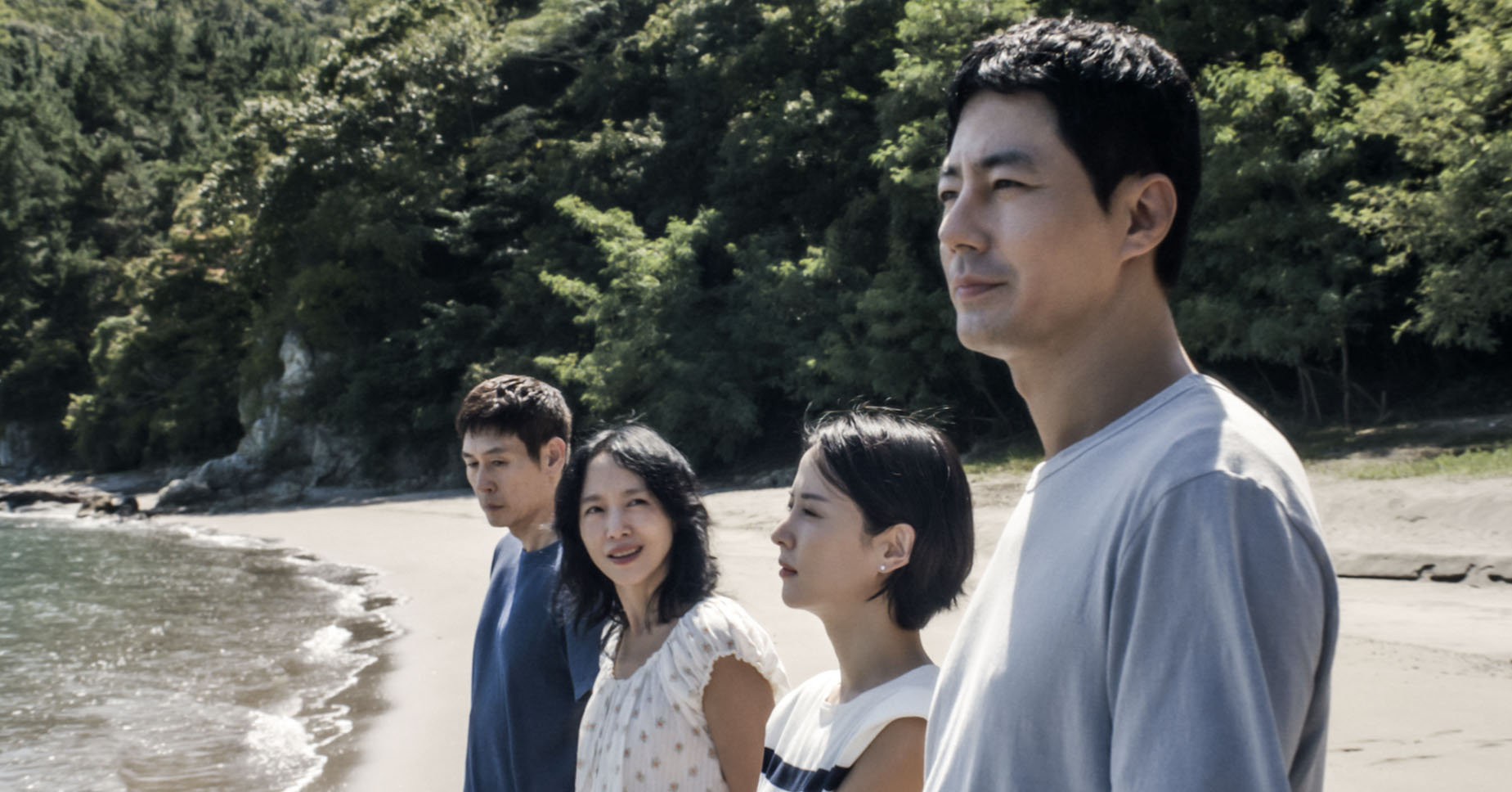
After a less-than-friendly interaction with Ye-ji, we’re introduced to one of the “dead,” Ho-seok (Sul Kyung-gu), a man who is incapable of smiling while also possessing a drinking habit, which can lead to unfavorable consequences. His wife, Mi-ok (Jeon Do-yeon), is a kind-hearted, friendly person who manages to befriend the filmmaker, despite their clear divide in tax brackets.
To complete the two-couple dynamic that the film lives on is Ye-ji’s husband, Sang-woo (Zo In-sung), a handsome assumed venture capitalist who is said to have inherited a business from his elders. Ye-ji and Sang-woo feel like the much less weathered-down versions of their lower-class counterparts, with Lee Chang-dong exploring all sorts of commentary on socioeconomic issues.
After Ye-ji and Mi-ok develop a friendship, the former begins to encroach on both Mi-ok and her laid-off husband’s lives, all but turning them into the perfect subjects for her documentary. This is where director Lee begins to blur the lines between how we perceive individuals who are living completely different lives. Ye-ji’s husband says something along the lines of applauding her ability to “act” in front of her documentary subjects. I couldn’t help but be reminded of “The Curse,” and other recent works that explore how well-intentioned moral implications from a higher-class population may come across as inauthentic due to obvious circumstantial differences and an inability to fully connect with their mission to help.
What has really stuck with me about “Possible Love,” is the clear emphasis on contemporary costume design, a criminally underrated art. For most of the film, Ye-ji is dressed in smart-casual outfits: white jeans that cost more than my laptop and a handbag that Mi-ok finds out is worth 5,000,000 South Korean won, which is estimated to be around $38,000. This is all in contrast to Mi-ok, who, outside of her uniform for work at a factory that makes face masks, is usually seen wearing various untrademarked graphic t-shirts.
When the affluent couple decides to invite Mi-ok and Ho-seok on a weekend getaway at their expansive vacation home, the film begins to dive into each character’s psyche more than ever. Forced to have conversations and spend intimate time with one another, this is where “Possible Love” begins to feel like an observational documentary, leading into remarkable unpredictability. Lee’s direction here never plays like reducing any character to some sort of larger moral lesson, he is simply interested in the human condition.
Ye-ji is eventually able to get Ho-seok to sit for an interview, the former’s mission all along. Ho-seok’s vulnerability begins to shift drastically after he attends a group therapy session with other laid-off laborers. It isn’t until he sits down with Ye-ji in front of the camera that the breakdown becomes imminent. This ultimately leads to questions about how earnest Ye-ji’s documentary is. How can the wife of an assumed private equity head be making a documentary about the lives of laid-off workers affected by such restructuring? Does the affluent background of the filmmaker deplete the documentary’s moral integrity? These are questions that Lee Chang-dong begs to be explored.
It’s a rarity to see four performances go toe-to-toe with each other in the same film, which speaks to how interested Lee Chang-dong is in performance. Every little moment, from dinners to some flashbacks, feels integral to each character.
“Possible Love,” is ultimately a film about our hidden desires. The film plays like a piece of literature – which is ironic considering Lee is a novelist himself – especially in the way that each act is able to let every character have plenty of breathing room within its brisk yet stoic 2 hour and 44 minute runtime. This is an exceptional drama about perception and desire, and one of the very best films of 2026.
Possible Love is now streaming on Netflix.
Wyatt Allison can be found on Twitter/X @wyattartsknox and on Letterboxd @filmwyatt.